Author's Preface
Excerpt from the book
This book began as research into a shipwreck and became, unexpectedly, something else as well.
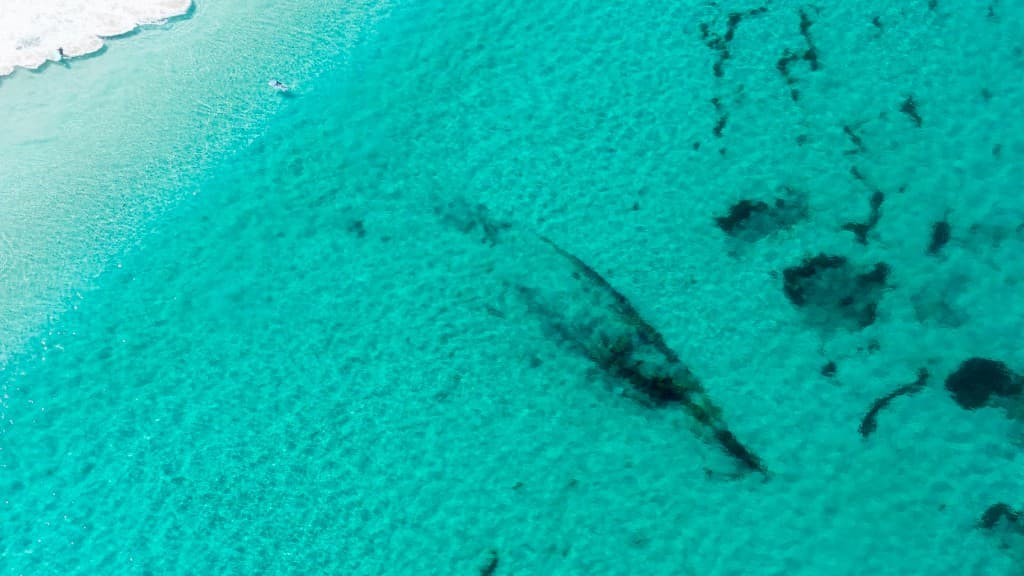
I had been photographing the coast around Calgardup Bay since 2017, mostly because that is the closest beach to my new home in Forest Grove. At that stage I knew the story of the Georgette the way most people who walk that section of the Cape to Cape Track know it: from the interpretive plaque above the car park at Redgate, in the version with Grace on the horse and the rest of it compressed into a paragraph. In February 2024 I flew a drone over the site on a morning when everything happened to align — the tide was low, the water was clear, there was no sand suspended in the swell, the sea itself was under a metre, the sand banks had moved away and exposed the wreck and the wind was blowing offshore. It is a combination that, by my own rough count since, occurs only a handful of times a year. On the screen of the controller, the wreck simply appeared — the dark, unmistakable line of a hull, lying exactly where the plaque said it would be. I had walked and photographed that beach for seven years only imagining the wreck was there somewhere. That morning it was there for all to see.
I had read Marcia van Zeller's book the year before, but it was not until late 2025 that I began the research in earnest — the Lloyd's Register entries, the newspaper accounts, the inquiry transcript — and then this year decided I had to trace the ship's roots all the way back to Scotland.
The SS Georgette was built in 1872 at Dumbarton, on the south bank of the Clyde, at a new yard called McKellar, McMillan & Co. She was the first vessel ever to leave their slipway — Yard Number 1 — and she was launched on the third of October that year into a river that was, at that moment, probably the most productive stretch of shipbuilding water in the world. Within a year she had left Scotland for Australia, where she would spend the remaining four years of her working life before going to the bottom off Calgardup Bay on the first of December 1876.
I went to Scotland to find her origins. What I had not expected was to find my father's as well.
He was born in Elderslie, a village just outside Paisley and about twelve miles upriver from Dumbarton. His name was Bill Bowskill. Elderslie is best known as the birthplace of William Wallace — every road sign says so, and the locals will stop you on the street to make sure you've visited the memorial. But it is also the village where my father grew up, in the 1920s and 1930s, in the long shadow of the Depression. He rarely spoke about it. He never went back, at least not while I was a child, and he said little about Scotland or what it had been like to be young there. It was not a subject he returned to.
He worked in a shipyard on the Clyde in the 1940s, by which time the industry that had built the Georgette was already far into its long decline. The same river, a generation later, a different kind of work. In 1950, at twenty-seven, he did what tens of thousands of Scots did in those years: he emigrated to Australia.
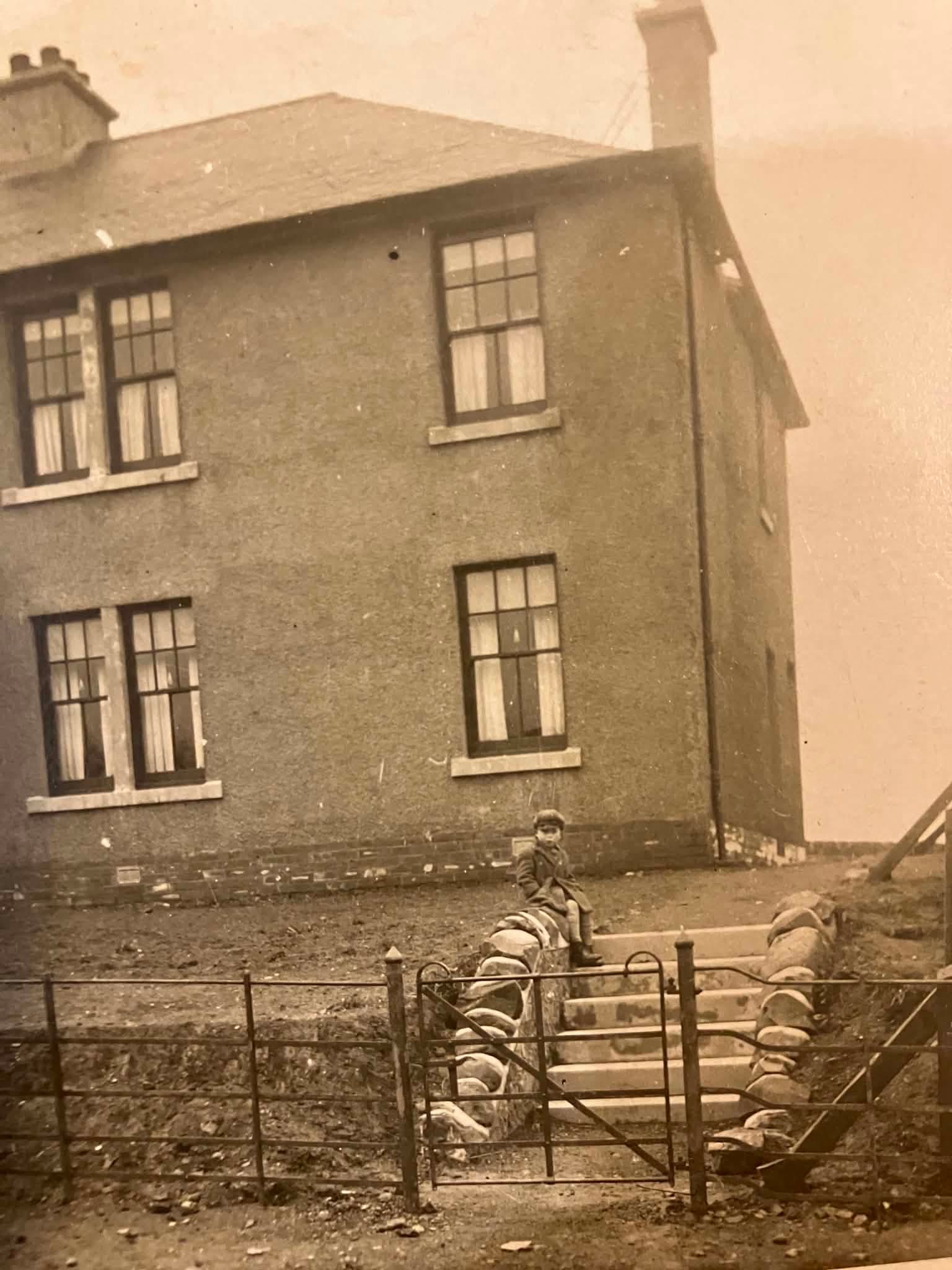
Standing in Elderslie, outside the house where he was born, I found myself thinking about the particular silence of people who leave a place and do not discuss it afterwards. I have a photograph of my father at six years old, sitting on the front steps of that house. There is no garden. The background is plain, the street quiet. The depression had its particular look, and it looked like that. Today the same house has a garden, the neighbourhood has colour and some bustle to it, the streets feel lived-in and reasonably prosperous. The place my father left is not the place I visited. He departed from the leaner version, and it has grown into something better.
My father's reticence about Scotland always felt like a closed door. It did not feel like grief, exactly, or shame — more like a decision to face forward, to become Australian in the thorough way that his generation did, without looking back. But standing there, I understood something about the texture of what he had left.
The Georgette left the same river seventy-eight years before him. She was, like him, bound for the south-west of Australia. She was, like him, not going back. The industry that built her and the industry that employed him as a young man were the same industry in its rise and in its fall, separated by the arc of a century.
I do not want to over-read the coincidence. Ships are not people, and a research trip to a shipbuilding town is not the same as the journey my father made. But the overlap was impossible to ignore when I stood at the river and tried to imagine the Lower Woodyard as it was in 1872 — the noise and heat of it, the smell of hot metal and the Clyde at low tide — and then thought of my father, twenty years old, learning his trade on that same river.
This book is about the Georgette. But it is also, in its own quieter way, about the river that made her, and the people the river sent away.
The Lower Woodyard where the Georgette was built employed around five hundred men at its height. By 1879 — six years after she left — the yard was closed and empty. The river had been sending people away long before my father decided to go.
What the research also found, and what this book became in part, was a question the shipwreck raised and the century and a half since has never fully answered: who gets remembered when a legend is built, and who is left out? That question hangs above all that follows. My sense is that there is a growing community interest in the truth.
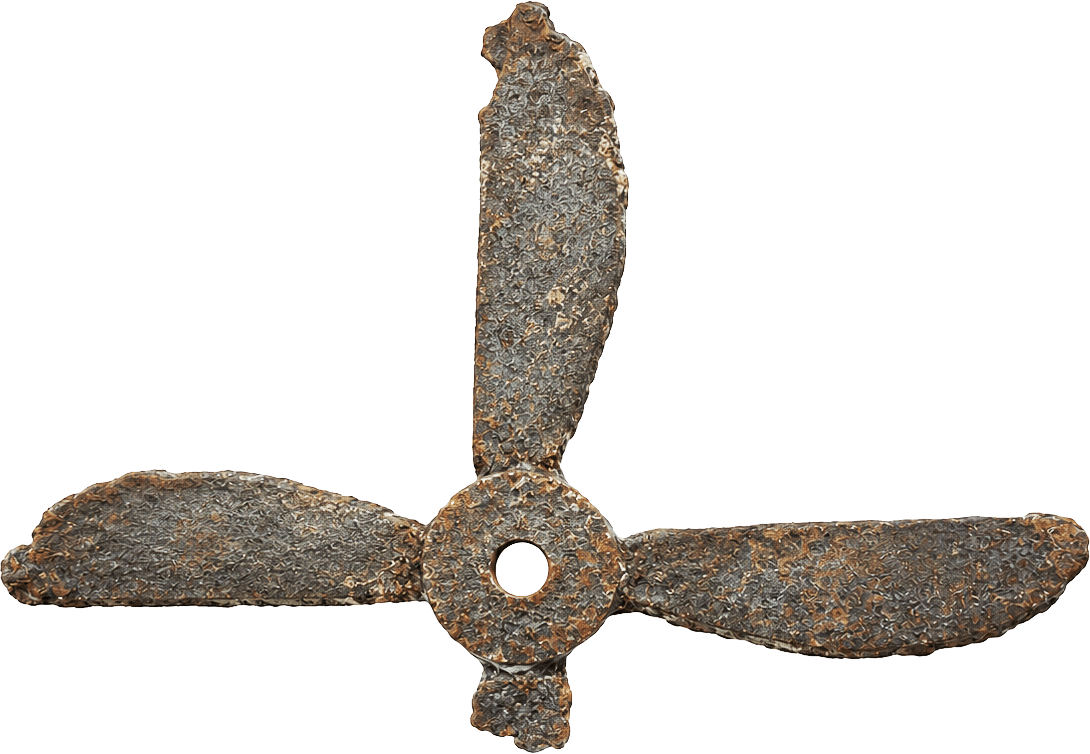
This leads me to explain the choice of image on the cover of the book. Why a broken propeller? When souvenir hunting divers attempted to salvage the propellers of the wreck in 1964, they had more of a fight on their hands than might have been expected. One prop was broken — a blade snapped off in the fight. It refused to leave the ship to which it belonged. That last time it was seen it had been reclaimed by the tides back into the deep. Attempts to dig it up in the 90s failed and the elusive prop is still there under the sand at Redgate beach. Exactly where it is and what became of the other propeller are now part of the mystery and the legend of the SS Georgette.